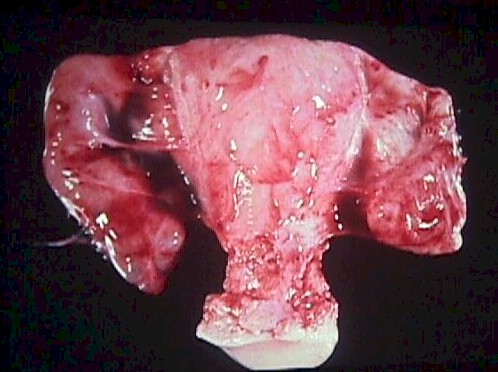
-Pelvic inflammatory disease refers to an acute infection of the upper genital tract in women involving the uterus, oviducts, and the ovaries.
-Sexual transmitted diseases (STD's) such as gonorrhea an chlamydia are often implicated but vaginal flora may play an important role
-Lower abdominal pain is the cardinal presenting symptom of PID
-Pain worsens with coitus or jarring movement
-New vaginal discharge, urethritis, proctitis, fever, and chills maybe associated signs but neither specific nor sensitive for diagnosis
-Risk factors for PID include: less than age of 25, young age at first intercourse, non barrier contraception, new multiple, or symptomatic partners, oral contraception, cervical ectopy, previous episode of PID, sex during menses, vaginal douching, bacterial vaginosis, and IUD
-About one half of the patients will have fever with PID
-Pelvic exam reveals mucopurulent discharge, and or acute cervical motion tenderness. Adnexal tenderness is strongly suggestive of PID
-Fitz Hugh Curtis Syndrome is infection of the liver capsule and peritoneal surfaces of the anterior RUQ associated with gonorrhea
-Treatment of Chlamydia is azithromycin 1 gram PO or doxycycline 100 mg BID for 10 days
-Gonorrhea is treated with ceftriaxone 250 mg IM times one dose

No comments:
Post a Comment